The Vatican’s connection to the Illuminati has fascinated conspiracy theorists, historians, and pop culture enthusiasts for centuries. From Dan Brown’s blockbuster novels to elaborate theories about Jesuit conspiracies, the idea that the heart of the Catholic Church is intertwined with the world’s most famous secret society continues to captivate millions. But what’s real, what’s fiction, and what do the symbols actually mean?
In this comprehensive guide, we’ll explore the alleged Vatican-Illuminati connections, decode the symbolism that fuels these theories, and separate historical fact from imaginative fabrication. Whether you’re a skeptic, a believer, or simply curious, this journey through the shadows of the Vatican will illuminate one of history’s most enduring mysteries.
Part 1: The Historical Context – What Really Happened?
The Real Illuminati: A Brief Refresher
Before we can understand the alleged Vatican connections, we must first understand what the Illuminati actually was. The Bavarian Illuminati was founded on May 1, 1776, by Adam Weishaupt, a professor of canon law at the University of Ingolstadt . The name derives from the Latin illuminatus, meaning “the enlightened ones” . Weishaupt’s group was a product of the Enlightenment a collection of freethinkers who believed that truth could be uncovered through logic, reason, and science. They opposed religious dogma, tradition, and what they saw as the Catholic Church’s suppression of human progress . The order was banned by the Bavarian ruler Karl Theodor in 1784 and effectively dissolved by 1787 . This is the historical reality: a short-lived German intellectual society with anti-clerical leanings. The modern image of an all-powerful Vatican-controlling cabal emerged much later.
The Galileo Affair: Science vs. Church
One of the foundational narratives in Vatican-Illuminati lore involves Galileo Galilei. In Dan Brown’s Angels & Demons, the Illuminati is portrayed as a secret society formed in the 17th century to resist the Church’s persecution of scientists who placed the sun, rather than the earth, at the center of the solar system . The society supposedly included scientific giants like Galileo and the artist Bernini . The historical reality is more nuanced. Galileo’s conflict with the Church was real he was tried for heresy in 1633 and spent his final years under house arrest. Pope John Paul II formally acknowledged the Church’s error in 1992, lifting the edict of the Inquisition against Galileo . However, there is no historical evidence that Galileo founded or joined any “Illuminati” secret society. This connection is a Dan Brown fabrication, though it makes for compelling fiction.
Part 2: The Vatican-Illuminati Connection in Pop Culture
Dan Brown’s “Angels & Demons”: The Blueprint
No discussion of Vatican-Illuminati connections can ignore the massive influence of Dan Brown’s 2000 novel Angels & Demons and its 2009 film adaptation starring Tom Hanks. The story is pure fiction, but its cultural impact has been enormous . The Plot: Harvard symbologist Robert Langdon is summoned by the Vatican after the pope’s death. Four preferred cardinals (papabili) have been kidnapped, and the ancient Illuminati brotherhood claims responsibility. A canister of antimatter stolen from the CERN laboratory has been hidden somewhere beneath Vatican City and will detonate at midnight, destroying the Vatican and much of Rome . Langdon follows a 400-year-old “Path of Illumination” through Rome’s churches, decoding symbols left by the Illuminati to rescue the cardinals and save the Vatican . Key Fictional Elements: Element In the Story Historical Reality Illuminati survival Secretly active for 400 years, seeking revenge against Vatican Dissolved in 1787; no evidence of continued existence Galileo as Illuminati member Galileo was an Illuminati member who encoded their secrets No historical evidence Bernini as Illuminati artist Bernini hid Illuminati symbols in his Vatican sculptures Bernini was a devout Catholic who worked for popes “Path of Illumination” A trail of symbols across Roman churches leading to Illuminati lair Complete fabrication Antimatter bomb Stolen from CERN, hidden beneath Vatican Antimatter is real, but cannot be weaponized this way The Marketing Campaign: “Altars of Science” The film’s marketing campaign included an elaborate viral website, www.altarsofscience.com, which showed security camera footage of an antimatter device with an Illuminati symbol behind it . The site’s source code revealed a threatening message: “We will destroy your four pillars, brand your preferiti and sacrifice them on the altars of science…and then bring your church down upon you. Vatican City will be consumed by light.” This fictional threat perfectly captures the pop culture image of the Illuminati as a science-worshipping, anti-Vatican conspiracy.
Part 3: The Deeper Conspiracy – Jesuits, Freemasonry, and the “Black Pope”
The Jesuit Order and Illuminati Theories
A more elaborate layer of Vatican-Illuminati conspiracy theory involves the Society of Jesus, better known as the Jesuits. Some theorists claim that the spiritual controllers behind the Illuminati are “Luciferian and Satanic elements within the so-called Society of Jesus and the Holy See of the Roman Catholic Church” . The head of the Jesuits is officially called the Superior General, but he is often nicknamed the “Black Pope” due to his influence and the black cassock traditionally worn by Jesuits . The current (as of this writing) Superior General is Arturo Sosa, though conspiracy literature often names previous holders of the office. Some theorists, like Leo Lyon Zagami in his book Confessions of an Illuminati, VOLUME III: Espionage, Templars and Satanism in the Shadows of the Vatican, claim that: The Jesuits operate a Vatican espionage network Satanic elements exist within the Vatican hierarchy The Jesuits were instrumental in creating Scottish Freemasonry The Knights Templar, the Jesuits, and the Illuminati are all interconnected It’s important to note that Zagami’s claims are not supported by mainstream historians and are considered fringe conspiracy theories. The Knights of Malta and the Constantinian Order Conspiracy literature often names specific Vatican-linked organizations as key players in the alleged Illuminati network: Organization Alleged Role Notable Figures Named in Conspiracy Sources Sovereign Military Order of Malta (SMOM) Papal-loyal knightly order with global influence Grand Master Matthew Festing; Prince Rupert zu Loewenstein Sacred Military Constantinian Order of Saint George Royal-Papal order with two branches Infante Carlos, Duke of Calabria; Darío Cardinal Castrillón Hoyos; Albert Cardinal Vanhoye, S.J. Order of the Holy Sepulchre Papal order overseeing Christian holy sites Mentioned in conspiracy sources Opus Dei Catholic personal prelature Prelate Javier Echevarría Rodríguez These organizations do exist and have legitimate Catholic functions. The claim that they form part of an Illuminati-controlled global conspiracy is unsupported by evidence. Royal Family Connections Conspiracy sources also name specific royals as part of this alleged Vatican-Illuminati network: Prince Rupert zu Loewenstein: Described as “the money-man to the Rolling Stones” and holder of multiple papal and knightly honors Prince Michael of Kent: Grand Master of the Grand Lodge of Mark Master Masons; his wife Princess Michael of Kent is a Dame of the SMOM and Constantinian Order Prince Edward, Duke of Kent: Grand Master of the United Grand Lodge of England; his wife and son converted to Catholicism The implication is that interlocking memberships in Masonic, knightly, and Catholic organizations create a hidden power structure. However, this assumes that membership in multiple organizations implies coordinated conspiracy rather than simply reflecting the social networks of European aristocracy.
Part 4: Symbols and Their Meanings
The Illuminati Symbol (According to Conspiracy Theory)
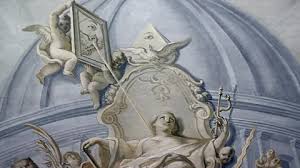
The symbol most commonly associated with the Illuminati is the pyramid with the all-seeing eye, often depicted with rays of light. This symbol appears on the U.S. one-dollar bill and countless conspiracy websites. However, as noted earlier, the Bavarian Illuminati never used this symbol. It is a Masonic symbol representing the “Great Architect of the Universe” watching over creation. Vatican Symbols and Their Alleged Hidden Meanings Conspiracy theorists see Illuminati symbolism everywhere in Vatican iconography. Here are some of the most common claims: Vatican Symbol Conspiracy Interpretation Actual Meaning Papal Tiara (triple crown) Represents Illuminati’s three-tiered hierarchy or triple goddess Symbolizes pope’s three-fold authority: heaven, earth, purgatory Keys of St. Peter (crossed keys) Masonic square and compass disguised Symbolizes the power to bind and loose (Matthew 16:19) Obelisk in St. Peter’s Square Ancient pagan fertility symbol adopted by Illuminati Roman monument brought to Vatican in 1586; Christianized with cross on top Vatican coat of arms Contains hidden Masonic/Illuminati symbols Contains tiara and keys traditional papal symbols Bernini’s sculptures Contain hidden Illuminati messages Baroque masterpieces with Catholic themes Gian Lorenzo Bernini: Artist or Illuminati Code-Master? In Angels & Demons, Bernini is portrayed as an Illuminati member who secretly encoded their “Path of Illumination” into his Vatican artworks . Langdon follows clues hidden in Bernini’s sculptures including angels, demons, and mythical figures to locate the kidnapped cardinals. The historical Bernini (1598-1680) was: The leading sculptor and architect of Baroque Rome A devout Catholic who worked for eight popes Responsible for the colonnade in St. Peter’s Square, the Ecstasy of St. Teresa, and countless other Vatican masterpieces Not a member of any Illuminati (which didn’t exist until a century after his death) The “hidden messages” are entirely fictional, though Bernini’s work does contain rich symbolism all of it Christian.
Part 5: The Path of Illumination – Fictional Churches, Real Locations
One of Angels & Demons’ most memorable elements is the “Path of Illumination”—a trail across Rome leading through four churches, each corresponding to an ancient element: Earth, Air, Fire, and Water . The path supposedly leads to the Illuminati’s secret lair, the “Church of Illumination.” The Fictional Path: Element Church in the Novel Actual Church Earth Santa Maria del Popolo Santa Maria del Popolo (real) Air Santa Maria della Vittoria Santa Maria della Vittoria (real) Fire San Giovanni dei Fiorentini San Giovanni dei Fiorentini (real) Water Piazza Navona (Fountain of the Four Rivers) Piazza Navona is real; the “clue” is in Bernini’s fountain Illuminati Lair Castel Sant’Angelo Castel Sant’Angelo (real) These churches do exist and contain works by Bernini and other Baroque masters. However, there is no “Path of Illumination” encoded in them. The churches are open to visitors, and millions of tourists have admired Bernini’s art without discovering any secret Illuminati messages. The “Clues” in the Churches In the story, each church contains a sculpture depicting a scene related to the element: Earth: A sculpture showing a demonic figure (Habakkuk and the Angel) Air: An angel pointing upward (Ecstasy of St. Teresa) Fire: An angel holding a spear (Daniel in the Lions’ Den) Water: The Four Rivers fountain showing a figure reaching toward water These artworks are real and can be seen in Rome today. Their “Illuminati connections” are entirely fictional.
Part 6: The Theology – Gnosticism vs. Christianity
Secret Knowledge vs. Public Truth
Some Christian commentators have noted that the appeal of Illuminati/Vatican conspiracy theories taps into ancient Gnosticism the belief that salvation comes through secret knowledge available only to an initiated elite . Dr. Corne Bekker of Regent University draws a sharp contrast between this Gnostic worldview and historic Christianity: “Jesus of Nazareth deeply valued and promoted the open declaration of truth for his disciples and followers… For Jesus, truth was absolute, coming from God through Him and available to everyone who desired to know.” He cites Matthew 5:14-16: “You are the light of the world. A city on a hill cannot be hidden. Neither do people light a lamp and put it under a bowl. Instead they put it on its stand, and it gives light to everyone in the house.” The Gnostic Appeal of Conspiracy Theories Conspiracy theories including those about the Vatican and Illuminati offer adherents a sense of secret knowledge that sets them apart from the unenlightened masses. This psychological appeal mirrors ancient Gnosticism: “the belief that truth can only be uncovered by the use of logic, reason and science” in opposition to religious faith . The irony is that while conspiracy theorists often see themselves as rationalists exposing religious superstition, their method of connecting random dots into hidden patterns is itself a form of faith-based thinking.
Part 7: The “New World Order” – The Grand Unifying Theory
The Vatican as NWO Headquarters
Some of the most elaborate conspiracy theories place the Vatican at the center of a plot to establish a New World Order (NWO) a totalitarian one-world government. According to these theories: The Vatican (through the Jesuits) secretly controls global finance, politics, and media Organizations like the United Nations, the European Union, NATO, the IMF, and the World Bank are Vatican-created fronts The Bilderberg Group, Council on Foreign Relations, and Trilateral Commission are directed by Jesuit/Vatican intelligence The ultimate goal is a world government ruled by the Pope (or his hidden masters) A detailed conspiracy source claims: “It is the assessment of the creator & coordinator of this resource that the spiritual controllers behind the dark forces of the Illuminati are Luciferian & Satanic elements within the so-called Society of Jesus a.k.a. the Jesuits & the Holy See of the Roman Catholic Church.. This Rome-based nexus acts via major players & place-people within Papal & Royal knighthood orders, hierarchic Satanic orders & high-level Masonic rites… to create what is referred to as the New World Order.” The Alleged NWO Network According to this worldview, the Vatican/Jesuit/Illuminati network controls virtually every major global institution : Category Organizations Named Policy Groups Bilderberg Group, Council on Foreign Relations, Trilateral Commission, Bohemian Club Political Bodies United Nations, European Union, Security & Prosperity Partnership, APEC Financial Institutions Bank for International Settlements, IMF, World Bank, Federal Reserve, European Central Bank Military Organizations NATO, UN “peacekeeping” forces, Blackwater Worldwide (mercenary army) This is an example of what historians call “grand conspiracy theory” a worldview in which every significant event and institution is explained by reference to a single, all-powerful hidden hand. The Problem with Grand Conspiracy Theories Grand conspiracy theories face several logical problems: Secrecy at scale: Coordinating thousands of people across generations without a single leak is implausible Unfalsifiability: Any evidence against the theory is dismissed as part of the conspiracy Confirmation bias: Believers see confirmation everywhere, disconfirmation nowhere Attribution error: Complex events with multiple causes are attributed to single agents The Vatican is a real institution with real influence. It is not the hidden control center of a global Illuminati plot.
Part 8: What Catholics Actually Believe
The Official Vatican Position
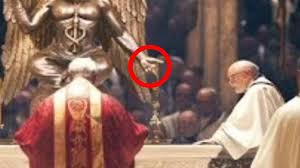
The Catholic Church’s official position on secret societies has evolved over centuries. Historically, the Church forbade Catholics from joining Freemasonry and other oath-bound secret societies. The 1983 Code of Canon Law removed explicit mention of Masonic societies, but the Congregation for the Doctrine of the Faith (then headed by Cardinal Joseph Ratzinger, later Pope Benedict XVI) clarified that “the Church’s negative judgment in regard to Masonic association remains unchanged since their principles have always been considered irreconcilable with the doctrine of the Church.” As for the Illuminati specifically, the Vatican has never issued any statement because the historical Illuminati was a minor German group that dissolved two centuries ago, and the modern conspiracy theory is not taken seriously by Vatican officials. Catholic Symbolism vs. Conspiracy Symbolism Catholic churches and rituals are rich with symbolism candles, incense, vestments, gestures, and art. This symbolic richness makes them fertile ground for conspiracy interpretation. However, for Catholics, these symbols have specific theological meanings: Light: Christ as “light of the world” Incense: Prayers rising to God Vestments: Liturgical colors marking seasons and feasts Gestures: Blessings, genuflections, signs of the cross expressing faith and reverence The Catholic view is that these symbols are public and explanatory, not secret codes for initiates.
Part 9: The Enduring Appeal of Vatican-Illuminati Theories
Why Do People Believe?
The persistence of Vatican-Illuminati conspiracy theories tells us something important about human psychology: Psychological Need How Conspiracy Theories Fulfill It Need for control If hidden forces control events, then events are controllable (by exposing or joining those forces) Need for meaning Random events become part of a coherent story Need for moral clarity World becomes battle between good (us) and evil (them) Need for special knowledge Believers are “awake” while masses are “sheeple” Need to explain suffering Evil is caused by identifiable villains, not impersonal systems The Role of Pop Culture Movies like Angels & Demons and books like Dan Brown’s novels have cemented the Vatican-Illuminati connection in popular imagination. When millions of people watch Tom Hanks race through Rome decoding Bernini sculptures, the line between fiction and reality blurs especially for those already inclined to believe in conspiracies. The Kernel of Truth Like most compelling conspiracy theories, the Vatican-Illuminati connection has a kernel of historical truth: The historical Illuminati was anti-clerical The Vatican does have secrets (archives, internal politics, complex history) The Catholic Church has been involved in European power politics for centuries Secret societies have existed and sometimes opposed the Church This kernel is then expanded into a grand narrative that bears little resemblance to reality.
Part 10: Conclusion – Separating Fact from Fiction
What We Know to Be True
Let’s review what’s actually established by evidence: Claim Verdict The Bavarian Illuminati existed (1776-1787) ✅ True The Illuminati was anti-clerical ✅ True The Vatican has complex history with science and secret societies ✅ True The Illuminati survived and now controls the Vatican ❌ False Bernini encoded Illuminati messages in his art ❌ False The Jesuits secretly run a global Illuminati network ❌ False There’s a “Path of Illumination” through Roman churches ❌ False Vatican organizations are fronts for Illuminati world domination ❌ False The Real Lesson The fascination with Vatican-Illuminati connections reveals more about us than about any secret society. We crave meaning, pattern, and narrative. We want the world to make sense even if the sense we make is frightening. A world controlled by a secret cabal is, in some ways, less terrifying than a world of random chaos and complexity. As the Vatican itself might say: the truth will set you free. And the truth is that while the Vatican has its share of human flaws and historical complexities, it is not the secret headquarters of an Illuminati plot to rule the world. A Final Word from a Catholic Perspective In Angels & Demons, Cardinal Strauss asks Robert Langdon at the end to “write about the church gently in his next book.” Langdon replies, “I’ll try” . This fictional exchange captures something real: the Church has often been misunderstood, caricatured, and cast as villain in popular culture. The real Vatican, like any human institution, is a mix of the sacred and the all-too-human. It doesn’t need Illuminati conspiracy theories to be interesting. Its 2,000-year history of saints and sinners, triumphs and tragedies, art and architecture, faith and doubt is fascinating enough. As Sr. Rose Pacatte, a Daughter of St. Paul and media literacy educator, wrote about Angels & Demons: “I don’t think ‘Angels & Demons’ is anti-Catholic. I think that Howard, like many filmmakers, is fascinated by the Catholic church. That they don’t always get it right says more about the ability of us Catholics, perhaps, to articulate our faith and tell our stories.” Perhaps that’s the real takeaway: the Church’s greatest challenge isn’t secret societies plotting in the shadows it’s telling its own story compellingly in the light. Frequently Asked Questions Q: Did the Illuminati really try to destroy the Vatican? A: No. The historical Bavarian Illuminati was a small German intellectual society that existed for just over a decade. It had no plans to destroy the Vatican . Q: Are there really secret Illuminati symbols in Vatican art? A: No. This is a fictional premise from Dan Brown’s novels. Artists like Bernini created Christian art with Christian symbolism, not hidden Illuminati messages . Q: What is the “Black Pope”? A: The “Black Pope” is a nickname for the Superior General of the Society of Jesus (Jesuits), derived from his black cassock. Conspiracy theorists claim this title indicates secret power, but it’s simply a colloquialism . Q: Do the Knights of Malta control the world? A: No. The Sovereign Military Order of Malta is a legitimate Catholic lay religious order that operates hospitals and humanitarian programs. It does not control world events . Q: Is there really a “Path of Illumination” through Rome? A: No. This is a fictional plot device from Angels & Demons. The churches mentioned in the book are real and worth visiting, but there’s no secret trail . Q: Was Galileo an Illuminati member? A: No. Galileo died in 1642, over a century before the Illuminati was founded. This is historical fiction . Q: Does the Vatican have secret archives about the Illuminati? A: The Vatican Secret Archives (now called the Vatican Apostolic Archive) contains millions of documents spanning centuries. There is no evidence it contains any special “Illuminati files” beyond whatever minor references might exist to the Bavarian group . Q: Are the Jesuits really a secret society? A: No. The Jesuits are a Catholic religious order with public membership, published writings, and known institutions. They have been controversial throughout history, but they are not a “secret society” in the conspiracy theory sense . Q: What should I visit in Rome if I’m interested in this topic? A: The churches mentioned in Angels & Demons Santa Maria del Popolo, Santa Maria della Vittoria, San Giovanni dei Fiorentini, and Piazza Navona are all real and contain magnificent art. Castel Sant’Angelo is also open to visitors. Enjoy them for their beauty and history, not for hidden Illuminati messages.