
The Illuminati meaning has evolved from a 15th-century term for “enlightened ones” to a modern conspiracy theory about a shadowy cabal controlling world events. But what’s actually confirmed about this secret society? In this comprehensive guide, we decode the real Illuminati symbols, explore the true meaning behind the name, and separate confirmed historical facts from fiction. Few words in the English language carry as much mysterious weight as “Illuminati.” It conjures images of all-seeing eyes, secret handshakes, and powerful elites pulling the strings of global politics from hidden boardrooms. But beneath the layers of conspiracy theory lies a fascinating true story one that begins in 15th-century religious mysticism and ends with today’s pop culture phenomenon. This guide will take you on a journey through the real Illuminati meaning, the symbols that have become associated with the group, and what is actually confirmed by historical evidence versus what remains speculative fiction.
Part 1: The True Illuminati Meaning What Does “Illuminati” Actually Mean? The word Illuminati is the plural form of the Latin word illuminatus, meaning “enlightened” . At its simplest level, the term refers to “persons who are or who claim to be unusually enlightened” . In modern usage, it can also simply mean “elite” . The earliest known use of the noun Illuminati in English dates back to around 1566 . Pronounced \ih-loo-muh-NAH-tee\ in American English , the word has accumulated layers of meaning over nearly five centuries. The Religious Origins of Illumination Before the Illuminati became associated with secret societies and conspiracy theories, the concept of spiritual illumination was deeply rooted in Christian mysticism . In the early Church, the term was used for catechumens after their baptism newly enlightened Christians who had received the light of faith . This religious usage reflects the original sense of illumination as divine enlightenment rather than secret knowledge. The more direct predecessor to the modern Illuminati concept was the Alumbrados (Spanish for “enlightened ones”), a mystical movement in Spain during the 16th and 17th centuries . These followers claimed that the human soul, having attained a certain degree of perfection, was permitted a vision of the divine and entered into direct communication with the Holy Spirit . This “perfection” meant that participation in liturgy, good works, and observance of religious forms were unnecessary for those who had received the “light” a position that did not endear them to the official Church . Accordingly, they were relentlessly persecuted, especially during the Inquisition . The Bavarian Illuminati: Historical Fact The group most commonly associated with the name Illuminati today was the Bavarian Illuminati, founded on May 1, 1776, by Adam Weishaupt, a professor of canon law at the University of Ingolstadt and a former Jesuit . Weishaupt’s goal was to replace Christianity with a religion rooted in reason . His order promoted Enlightenment ideals including: Opposition to superstition and prejudice Resistance to religious influence over public life Opposition to abuses of state power Support for women’s education and gender equality The Bavarian Illuminati was organized hierarchically, with members using classical pseudonyms Weishaupt called himself “Spartacus” . At its peak, the order had perhaps 2,000 members, including influential figures such as astronomer Johann Bode, writer Friedrich Nicolai, philosopher Friedrich Jacobi, and poet Friedrich Leopold . However, the group was short-lived. Internal conflicts plagued the movement, and it was ultimately outlawed and dissolved by the Bavarian government in 1785 . By 1787, the original Illuminati was effectively extinct . The Modern Generalized Meaning Around 1800, the word illuminati began to take on a generalized (and usually non-capitalized) meaning referring to any group of experts or elites in a particular field . Today you might encounter phrases like: “Academic illuminati” (leading scholars) “Technology illuminati” (tech industry elites) “Art world illuminati” (influential art figures) “Whisky illuminati” (whisky experts) This usage follows the pattern of other Italian plural -ati words in English, such as literati, glitterati, and digerati .
Part 2: Illuminati Symbols What’s Actually Confirmed? The symbolism associated with the Illuminati is a mix of historically documented emblems used by the Bavarian order and symbols attributed to them later by conspiracy theorists. Let’s separate what’s confirmed from what’s speculated. Symbol Historical Confirmation Actual Meaning Owl of Minerva  Confirmed Wisdom and eternal vigilance; appeared on medals of Minervals and Illuminati Minor Crown, Scepter, and Skeleton Confirmed Used in Regent initiation ritual to remind candidates of mortality Fire and Flame Imagery Confirmed Weishaupt was fascinated by Zoroastrianism, which features flame symbolism Circle with a Dot Confirmed The Bavarian Illuminati’s preferred alternative to the all-seeing eye Letters “D” and “P” Confirmed Stood for “Deo Proximo” (God is near, in Latin); appeared on meeting room carpet All-Seeing Eye
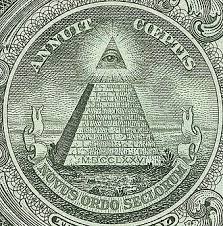
  Speculated Masonic symbol of divine watchfulness; not actually used by Bavarian Illuminati Pyramid Speculated Associated with the Great Seal of the US, not historical Illuminati Number 666 Speculated From biblical apocalyptic tradition; no connection to Weishaupt’s order Pentagram Speculated Ancient symbol of protection; appears in Washington D.C. city design Obelisk Speculated Found in world power centers; no evidence of adoption by Weishaupt Butterfly Speculated Associated with modern Monarch mind control theories, not historical group Confirmed Illuminati Symbols The Bavarian Illuminati did create symbols that united members and facilitated communication . These historically documented emblems include: The Owl of Minerva: This was the most important Illuminati symbol, stamped on the medals of Minervals and Illuminati Minor . The owl represented wisdom and eternal vigilance. It’s also the symbol of the Bohemian Grove, a legendary private site in California . Initiation Ritual Symbols: To become a Regent, candidates entered a room containing a skeleton, a crown, and a scepter, and were asked whether that body belonged to a king, a noble, or a beggar . This ritual served as a memento mori a reminder of mortality. The Skull & Bones secret society and Freemasonry also use skull imagery . Fire and Flame Imagery: Weishaupt was fascinated by Zoroastrianism, an ancient Persian religion with numerous references to flames and fire . This explains the prominent use of red in Illuminati iconography . The Statue of Liberty, created by Freemason Frédéric Bartholdi, carries a torch that conspiracy theorists interpret as representing the establishment of a New World Order . Circle with a Dot: While the all-seeing eye is popularly associated with the Illuminati today, the Bavarian order actually preferred a different symbol: a circle with a dot inside . Letters “D” and “P”: These letters, meaning “Deo Proximo” (God is near, in Latin), appeared on the carpet of the room where the Bavarian Minervals met . Speculated Symbols: What Conspiracy Theorists Believe The symbols most people associate with the Illuminati today are actually speculative attributions that emerged long after the Bavarian order dissolved. The All-Seeing Eye (Eye of Providence) : This is perhaps the most famous “Illuminati symbol,” appearing on the U.S. one-dollar bill and countless conspiracy websites. The symbol features an eye enclosed in a triangle, often with rays of light emanating from it . In reality, the all-seeing eye is a favorite of Freemasonry, serving as a reminder that the “Great Architect of the Universe” observes everything we do . It appears on the dollar bill alongside the inscription “1776” the year of American independence and, coincidentally, the founding of the Bavarian Illuminati . But the Bavarian Illuminati themselves never used this symbol. They preferred the circle-with-dot symbol mentioned above . The Pyramid: Like the all-seeing eye, the pyramid particularly the unfinished pyramid with 13 levels is strongly associated with Illuminati conspiracy theories . The 13 levels supposedly represent 13 family lineages, and the incomplete state indicates the sect hasn’t yet achieved its goals . However, this symbolism derives from the Great Seal of the United States, not from the Bavarian Illuminati . The Number 666: One theory about the Illuminati’s origin links the group to Satan, and by extension, believers claim the number 666 is idolized among the “enlightened ones” . This number comes from the Book of Revelation in the Bible and has been “identified” as subliminal messaging in films, music videos, and company logos that supposedly support the New World Order . The Pentagram: In 1791, President George Washington hired Frenchman Pierre Charles L’Enfant, a notorious Freemason, to design the capital city, Washington D.C. . In the city’s map, some see an inverted pentagram, reinforcing the association of this protection symbol (also used by Satanists) with the Illuminati . In Freemasonry, the pentagram is used by the women’s order, the Eastern Star . The Obelisk: Over 9,000 Masons were present at the inauguration of the Washington Monument version in D.C., which sits at the intersection of lines connecting the White House and the three largest political monuments in the city . Obelisks appear in all major world power centers New York, London, Vatican, São Paulo but there’s no evidence Weishaupt adopted this symbol . The Monarch Butterfly: Conspiracy theorist Springmeier claims the “illuminated ones” have a worldwide mind control program called “Monarch,” activated by images of this type of butterfly, kittens, zebras, doors, and even windows . According to him, over 2 million Americans have been enslaved by this system .
Part 3: Is the Illuminati Confirmed? What Is Actually Confirmed? The historical Bavarian Illuminati is confirmed to have existed. Historical records, including government documents and the order’s own writings, verify that: Adam Weishaupt founded the Order of the Illuminati on May 1, 1776 The group had a hierarchical structure with secret ranks and pseudonyms Members included Goethe, Bode, Nicolai, Jacobi, and possibly Mozart The order was suppressed by the Bavarian government in 1785 and dissolved by 1787 These are established historical facts, not speculation. What Is Not Confirmed What is not confirmed and almost certainly false is the modern conspiracy theory of an all-powerful Illuminati cabal controlling world events . As Britannica notes, “The Rosicrucians, Alumbrados, and Perfectibilists don’t much resemble the 21st-century idea of the Illuminati as an all-knowing cabal that controls major world events. They were relatively small groups of outsiders who rarely, if ever, broke into the mainstream” . The modern Illuminati conspiracy theory originated in the late 18th century with claims that the secret society aimed to establish a new world order and overthrow monarchies . These claims were largely unsubstantiated and spread through books like John Robison’s Proofs of a Conspiracy (1797) and the works of Augustin Barruel . The theory was further popularized in the 20th century by the Discordian movement and Robert Shea and Robert Anton Wilson’s The Illuminatus! Trilogy, which intentionally blended fact and fiction . The Verdict on Modern Illuminati Claims Despite numerous claims, “there is no concrete evidence to prove the existence of the Illuminati as a secret society controlling global events” . The lack of solid evidence has led experts, researchers, and historians to dismiss the conspiracy theory as baseless speculation and paranoia . Organizations that claim to be modern Illuminati orders do exist, but “there is no evidence that these present-day groups have any significant power or influence. They promote themselves using the Bavarian Illuminati to attract membership” . Why People Believe in the Illuminati Conspiracy Belief in the Illuminati conspiracy theory can be attributed to various psychological factors : Need for control: In a complex, chaotic world, the idea of a hidden order is comforting Confirmation bias: People seek evidence that confirms their existing beliefs Mistrust of authority: Distrust of governments and institutions fuels suspicion Appeal of secret knowledge: Believing you know “the truth” sets you apart from the uninformed masses The internet has played a significant role in spreading Illuminati theories, providing platforms for believers to share and amplify their beliefs . Social media, in particular, enables theories to go viral . The Dangers of Belief While belief in the Illuminati may seem harmless, it can have negative consequences . It perpetuates misinformation, encourages paranoia, erodes critical thinking, and diverts attention from genuine societal issues . The entertainment industry has capitalized on this fascination, with artists and filmmakers using Illuminati imagery, lyrics, and references as marketing strategies to create intrigue . This further fuels the popularity of related content .
Part 4: The Illuminati in Popular Culture From History to Hollywood The Illuminati has become a staple of popular culture, appearing in countless movies, books, and music videos. The post-credits scene of the Malayalam film Lucifer (2019) featured a news snippet reading “Khureshi Ab’raam: Illuminati’s new arm?” . The sequel L2: Empuraan (2025) continues this thread, with promos featuring the Eye of Providence symbol and what appears to be a cicada symbol possibly connected to the mysterious internet group Cicada 3301 . Dan Brown’s novel Angels & Demons (2000) brought the Illuminati to millions of readers, depicting the group as a powerful secret society bent on destroying the Vatican . Celebrity Illuminati Rumors Conspiracy theories often claim that influential figures politicians, celebrities, and intellectuals are Illuminati members . However, “no evidence has ever been presented to confirm such claims” . Individuals implicated as Illuminati members are typically targets of speculative accusations without any substantial foundation . One academic study of an Agnez Mo music video identified several symbols interpreted as Illuminati-related, including: Baphomet (a pagan deity associated with forbidden knowledge, witchcraft, Satanism, and occultism) Pyramid sign or ROC symbol (hand gestures representing Illuminati symbols) All Seeing Eye (representing God) Hand on breast (signifying submission) Crossed wrists (meaning bound or tied) Hand on neck (representing sacrifice) Snake, dragon, and reptile imagery (representing forbidden knowledge used as Illuminati bait) These interpretations reflect how conspiracy theorists decode popular culture for hidden meanings, regardless of artists’ actual intentions. Conclusion: Illuminati Meaning, Symbols, and Confirmed Truth So what have we learned about the Illuminati meaning, its symbols, and what’s actually confirmed? The meaning of Illuminati has evolved dramatically over five centuries from baptized Christians in the early Church, to mystical Spanish Alumbrados seeking divine connection, to a short-lived Bavarian intellectual society promoting Enlightenment ideals, to a generalized term for elite experts, and finally to the modern conspiracy theory of a shadowy world-controlling cabal. The symbols associated with the Illuminati are a mix of historically confirmed emblems (the Owl of Minerva, flame imagery, mortality symbols) and speculative attributions (the all-seeing eye, pyramid, 666) that entered popular imagination through Masonic imagery, American currency, and conspiracy literature. What’s confirmed is that the Bavarian Illuminati was real but brief existing for only about a decade before being suppressed. What’s not confirmed and almost certainly false is that this group survived, evolved into a global conspiracy, and now controls world events from the shadows. As Britannica concludes, “While it’s difficult to prove that something does not exist, all this historical precedent makes it safe to assume that the 21st-century ‘Illuminati‘ is nothing more than a conspiracy theory. And if it does exist, the Illuminati is apparently so good at staying hidden that it’s unlikely anyone will ever find it” . The enduring fascination with the Illuminati tells us more about human psychology than about any secret society our need for pattern and meaning, our suspicion of concentrated power, and our love of a good mystery. The symbols, the secrets, the shadowy figures they make for a compelling story. But a story is all it ever was. Frequently Asked Questions Q: What does “Illuminati” actually mean? A: Illuminati is the plural form of the Latin word illuminatus, meaning “enlightened.” It refers to people who claim to be unusually enlightened or to elites in a particular field . Q: Was the Illuminati real? A: Yes, the Bavarian Illuminati was a real secret society founded in 1776 and dissolved by 1787. However, the modern conspiracy theory about an all-powerful Illuminati controlling world events is not supported by evidence . Q: What symbols did the real Illuminati actually use? A: Historically confirmed symbols include the Owl of Minerva, fire and flame imagery, a circle with a dot, and ritual items like skeletons, crowns, and scepters. They did not use the all-seeing eye or pyramid commonly associated with them today . Q: What does the all-seeing eye on the dollar bill mean? A: The all-seeing eye (Eye of Providence) on the U.S. one-dollar bill is a Masonic symbol representing divine watchfulness. It was added to the Great Seal in 1792 and does not represent the Illuminati, which never used this symbol . Q: Are celebrities really in the Illuminati? A: There is no evidence that any celebrities are Illuminati members. Symbols in music videos are typically artistic choices or marketing strategies, not evidence of secret society affiliation . Q: Can I join the Illuminati? A: yes if you are interested in Joining. Any website offering Illuminati membership fee is running a scam. Q: Why do people believe in the Illuminati conspiracy? A: Psychological factors include the need for control in a chaotic world, confirmation bias, mistrust of authority, and the appeal of feeling like you possess secret knowledge . Q: Who started the Illuminati? A: The Bavarian Illuminati was founded by Adam Weishaupt, a professor of canon law at the University of Ingolstadt and a former Jesuit, on May 1, 1776