
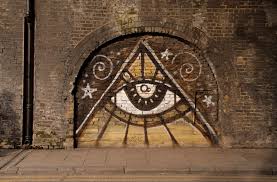
Illuminati in London has fascinated conspiracy theorists, historians, and curious tourists for centuries. From the City of London’s financial district to Westminster’s political corridors, believers claim the British capital is littered with secret society symbols hiding in plain sight. But what’s real, what’s imagined, and why does London hold such a central place in Illuminati lore? This comprehensive guide explores the alleged Illuminati connections across London, examining the buildings, monuments, and institutions that conspiracy theorists point to as evidence of secret society influence. Whether you’re a skeptic, a believer, or simply fascinated by urban mysteries, this journey through London’s shadowy side will reveal why the city remains a focal point for global conspiracy theories.
Part 1: Why London? The Historical Foundation of Illuminati Interest
A City Built on Secrecy
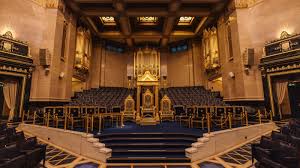
London’s connection to secret societies isn’t entirely fictional. The city has been home to some of the world’s most influential private organizations for centuries. The City of London the historic square mile that serves as the UK’s financial heart operates under its own governance, with traditions dating back to medieval times. This independent status, combined with the concentration of global wealth and power, naturally attracts conspiracy speculation. The Freemasons, often conflated with the Illuminati in popular imagination, have deep roots in London. The United Grand Lodge of England has been headquartered at Great Queen Street in Covent Garden since 1775, and the city contains numerous Masonic halls, temples, and meeting places. For conspiracy theorists, this visible Masonic presence is merely the public face of a deeper, more sinister Illuminati network. The City of London Corporation One of the most persistent Illuminati in London theories involves the City of London Corporation the governing body of the financial district. Conspiracy theorists point to several “suspicious” facts: The City has its own police force, independent of the Metropolitan Police It maintains its own ceremonial traditions, including the annual Lord Mayor’s Show The City’s official mace features a small, hidden chamber traditionally used for secret documents Ancient livery companies (trade guilds) still wield considerable influence To believers, these historical anomalies aren’t quaint traditions they’re evidence of a shadow government operating within the capital.
Part 2: The Great Fire of London – Was 1666 an Illuminati Code?
The Number 666 in London’s History
One of the most intriguing Illuminati in London theories centers on the Great Fire of London in 1666. For numerologically inclined conspiracy theorists, the date itself is significant: 1666 contains the number 666, the “Number of the Beast” from the Book of Revelation. The theory suggests that the fire wasn’t an accident but a deliberate act of purification or symbolic destruction by secret societies. Christopher Wren’s subsequent rebuilding of London including St. Paul’s Cathedral and dozens of churches is interpreted by some as the Illuminati constructing a new, symbolically charged city. Wren’s Mysterious Symbols Sir Christopher Wren, the architect responsible for rebuilding much of London after the fire, was himself a scientist, mathematician, and member of the Royal Society an organization that conspiracy theorists sometimes link to secret society networks. Believers claim that Wren embedded hidden messages in his buildings: St. Paul’s Cathedral’s dome is said to represent the all-seeing eye The Monument to the Great Fire stands exactly 202 feet tall a number some interpret as significant The layout of Wren’s churches supposedly forms geometric patterns visible only from above While mainstream historians dismiss these claims, they remain popular in conspiracy circles.
Part 3: The City’s Most Famous Illuminati “Clues”
1. The Bank of England
The Bank of England, founded in 1694, is a prime target for Illuminati speculation. As one of the world’s most powerful financial institutions, it naturally attracts theories about global monetary control. Conspiracy theorists note: The Bank’s building features classical architecture with numerous symbolic elements Its founding charter involved Scottish financier William Paterson, whom some link to secret societies The Bank’s role in creating national debt is seen as part of the Illuminati’s plan for financial enslavement 2. The Royal Exchange The Royal Exchange, founded by Sir Thomas Gresham in 1565, features a prominent grasshopper weathervane the Gresham family crest. For conspiracy theorists, the grasshopper is a significant symbol, appearing in various contexts throughout London and potentially indicating secret society meeting places. 3. The London Eye The modern London Eye, built to celebrate the year 2000, has become a favorite target for Illuminati theorists. Its circular shape, giant size, and prominent location on the South Bank lead some to claim it represents the all-seeing eye of the Illuminati watching over London. The fact that it was a “millennium project” a time often associated with New World Order prophecies adds to its conspiratorial appeal. 4. Cleopatra’s Needle Cleopatra’s Needle on the Victoria Embankment is perhaps London’s most symbolically rich monument for conspiracy theorists. This ancient Egyptian obelisk, dating from around 1450 BCE, was brought to London in 1878. Beneath it, buried items include: A railway timetable Bibles in several languages A complete set of British coinage A child’s doll A razor Photographs of the era’s most beautiful English women For theorists, obelisks themselves are significant they appear in Washington D.C., Paris, Rome, and other major cities, supposedly marking “power points” in a global Illuminati network. Cleopatra’s Needle is flanked by two bronze sphinxes that, interestingly, face away from the obelisk rather than toward it a detail some find suspicious. 5. The Houses of Parliament The Palace of Westminster is rich with symbolic potential. The clock tower (home to Big Ben), the layout of the chambers, and the numerous statues and carvings all attract conspiratorial interpretation. Some theorists claim the entire building is designed as a massive Masonic temple, with geometric relationships between key points forming meaningful patterns.
Part 4: The Tube and the “Illuminati Lines”
Underground Symbolism
London’s Tube network, with its sprawling underground tunnels and stations, naturally invites comparison to secret societies operating beneath the surface. Conspiracy theorists have developed elaborate theories about the Underground: Some claim the Tube map is designed to resemble a magical sigil or occult symbol Others believe unused stations house secret government facilities or Illuminati meeting rooms The deep-level tunnels are said to connect key power centers, allowing elites to move unseen The “Lost” Stations The existence of abandoned Tube stations such as Aldwych, Down Street, and the infamous “British Museum” station fuels speculation about hidden activities. During World War II, some stations were used as government bunkers; for conspiracy theorists, this proves their ongoing secret use.
Part 5: The Royal Family and London’s Secret Societies
Buckingham Palace and the Royals
The British Royal Family’s connections to secret societies particularly Freemasonry are well-documented. As explored in our previous post on royal secret society connections, multiple monarchs have been Freemasons, and current royals maintain Masonic affiliations. For Illuminati in London theorists, Buckingham Palace becomes a focal point: Its location, layout, and architectural details are scrutinized for hidden meanings The Changing of the Guard is interpreted as ritualistic Royal ceremonies are seen as public displays of occult power St. James’s Palace and Clarence House Other royal residences attract similar attention. St. James’s Palace, the senior royal palace, and Clarence House, home to other royals, are incorporated into the symbolic geography of Illuminati London.
Part 6: The London Necropolis Railway – Death and Conspiracy
A Railway for the Dead
One of London’s most macabre historical oddities the London Necropolis Railway has become a favorite topic for conspiracy theorists. Operating from 1854 to 1941, this railway carried corpses and mourners from a dedicated station at Waterloo to Brookwood Cemetery in Surrey, bypassing overcrowded London burial grounds. For theorists, the existence of a dedicated “death railway” suggests darker purposes: Secret transportation of bodies used in occult rituals Underground connections to Masonic temples Evidence of elite control over death itself The Brookwood Cemetery Connection Brookwood Cemetery itself, one of the largest in Europe, contains numerous Masonic plots and memorials, adding another layer to the conspiracy narrative.
Part 7: Modern London – Celebrities and Pop Culture
The London Celebrity Scene
Modern Illuminati in London theories increasingly focus on celebrities spotted in the capital. London’s status as a global entertainment hub means that stars frequently appear at events, restaurants, and clubs each sighting generating new speculation. When international stars perform in London, their concerts are scrutinized for Illuminati symbolism. The O2 Arena, Wembley Stadium, and other major venues become stages for alleged ritual performances. London Fashion Week London Fashion Week attracts its share of conspiracy speculation. Runway shows featuring occult imagery, models making unusual gestures, and designers with esoteric themes all feed into the narrative that the fashion industry is controlled by secret societies.
Part 8: The Psychology of London Illuminati Theories
Why London?
Why does London attract so much Illuminati speculation? Several factors explain the city’s centrality: Factor Explanation Historical depth 2,000 years of continuous history provide endless material for interpretation Concentrated power Government, finance, media, and culture coexist in a small geographic area Architectural richness Centuries of building styles create visual complexity ripe for symbolic reading Masonic presence Visible Masonic institutions provide tangible “evidence” Royal mystique The monarchy’s ancient traditions invite conspiratorial interpretation Global influence London’s historical role as imperial capital makes it a natural conspiracy focus The Tourist’s Treasure Hunt For many visitors, exploring Illuminati in London is less about serious belief and more about adding mystery to sightseeing. A walk through the City becomes a treasure hunt for hidden symbols a way of engaging with history that feels interactive and exciting.
Part 9: Debunking the Myths – What Historians Say
The Historical Consensus
Mainstream historians offer more mundane explanations for most Illuminati claims: City of London traditions reflect medieval governance, not Illuminati plotting Masonic symbols are open and documented, not secret signals Architectural details follow the artistic conventions of their time The London Eye is a Ferris wheel, not an occult monument Royal ceremonies are public traditions, not hidden rituals The Real Secret Societies Ironically, the genuine secret societies in London’s history are often less exciting than the fictional ones. The Kit-Cat Club, the Scriblerus Club, and other 18th-century literary and political groups were secretive but hardly world-controlling. The Bloomsbury Group of the early 20th century was influential in art and literature but not in global conspiracy.
Part 10: Conclusion – Seeing London Through New Eyes
The City as Canvas
Whether you believe in the Illuminati or dismiss it entirely, exploring London through a conspiratorial lens offers a unique way of seeing the city. Every statue, every building corner, every street layout becomes part of a larger story waiting to be decoded. A Final Perspective The enduring fascination with Illuminati in London reveals more about human psychology than about any actual secret society. We crave meaning, pattern, and hidden narratives. London, with its layered history and concentrated power, provides the perfect canvas for projecting these desires. The next time you walk through the City, past the Bank of England, along the Embankment, or across Westminster Bridge, take a moment to look really look at the buildings around you. You may not find Illuminati secrets, but you’ll discover something perhaps more valuable: a deeper appreciation for the rich, complex, and endlessly fascinating story of one of the world’s great cities. And who knows? You might just spot something that makes you wonder. Frequently Asked Questions Q: Is the London Eye really an Illuminati symbol? A: No. The London Eye was built as a millennium landmark and is simply a Ferris wheel. Its circular shape has no connection to secret societies . Q: Are there secret tunnels under London used by the Illuminati? A: London has many tunnels Tube lines, utility tunnels, and wartime bunkers but no evidence suggests they’re used by any Illuminati organization . Q: Was the Great Fire of London an Illuminati plot? A: No. The fire was a tragic accident that began in a bakery on Pudding Lane. The 1666 date’s numerological significance is coincidental . Q: Does the City of London have its own government because of the Illuminati? A: No. The City’s unique governance dates to medieval times and reflects London’s historical development, not secret society influence . Q: What should I visit in London if I’m interested in conspiracy theories? A: The Bank of England, St. Paul’s Cathedral, Cleopatra’s Needle, and the Houses of Parliament are all rich in history and symbolism enjoy them for their fascinating stories, not hidden messages .