
Are the Illuminati real? The short answer is yes but not in the way conspiracy theorists would have you believe. The real Illuminati was a short-lived 18th-century intellectual society that was dissolved over 230 years ago, while the modern legend of an all-powerful cabal controlling world events is pure fiction. This definitive guide separates historical fact from cultural myth, tracing the Illuminati’s journey from Enlightenment-era Bavaria to its current status as pop culture’s favorite boogeyman. Introduction: The Question That Won’t Die A few months ago, a nine-year-old girl asked her father a question that has haunted humanity for centuries: “Dad, do the Illuminati exist, for real?” . She was genuinely worried, having heard about them at school. Her father explained it was just a myth, to which she replied, “Oh, you mean like a conspiracy theory!” . This exchange perfectly captures the strange duality of the Illuminati. It exists simultaneously as a historical fact and a modern legend. It’s a secret society thats real. It’s a group that had members and now has millions of believers and members who are convinced it controls everything.
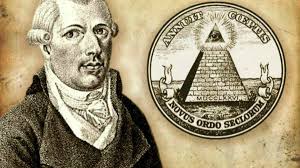
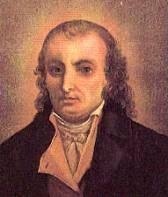
Part 1: The Historical Illuminati What Was Actually Real? The Birth of the Order (1776) On May 1, 1776, a 28-year-old professor of canon law named Adam Weishaupt founded a secret society at the University of Ingolstadt in Bavaria, part of modern-day Germany . His creation was originally called the “Order of Perfectibilists” a name he later changed because it “sounded too strange” . At its first meeting, there were exactly five people . “And you might well think, Well, isn’t this just basically a reading club?” notes historian Michael Taylor. “But Weishaupt is very clear. There is some kind of Messianic complex within him, and he really does want to cause a revolution in the way that the world operates” . The Mission: Enlightenment, Not World Domination Weishaupt’s goals were surprisingly noble for a man whose name would become synonymous with shadowy evil. He was frustrated by the control that former Jesuit priests exerted over his university and his career . More broadly, he opposed “superstition, obscurantism, religious influence over public life, and abuses of state power” . The Bavarian Illuminati was a product of the Age of Enlightenment. Its members sought to promote rationalism, secularism, and freedom of thought at a time when the Catholic Church and conservative monarchy held immense power . As their general statutes stated: “The order of the day is to put an end to the machinations of the purveyors of injustice, to control them without dominating them” . This is crucial to understand: The original Illuminati were not trying to control the world. They were trying to free it from what they saw as oppressive control by church and state. The Structure: Secret Ranks and Pseudonyms Like many organizations of its era, the Illuminati adopted a hierarchical structure with secret ranks: Novice: Entry-level members Minerval: Those who had received basic instruction Illuminated Minerval: Advanced members Areopagus: The ruling council Members took classical pseudonyms to protect their identities. Weishaupt called himself “Spartacus.” Other members adopted names like Ajax, Agathon, and Tiberius . They communicated using secret ciphers and met in private, often using Freemason lodges as cover . Who Actually Joined? Despite its secretive nature, the Illuminati attracted some genuinely famous figures. Historians have confirmed that Johann Wolfgang von Goethe, Germany’s greatest literary figure, was a member . There is strong circumstantial evidence that both playwright Friedrich Schiller and composer Wolfgang Amadeus Mozart were also members . Other notable members included astronomer Johann Bode, writer Friedrich Nicolai, and philosopher Friedrich Jacobi . At its peak in the early 1780s, the order had between 1,500 and 2,500 members across Europe . However, historian Michael Taylor emphasizes that membership doesn’t mean these figures “were plotting to overthrow all worldly governments and to destroy religion. It does mean, however, that they saw in the Illuminati the kinds of enlightened, rational ideas that were so appealing to them” . The Downfall: How the Illuminati Died The Illuminati’s downfall came from their own overconfidence. In Munich, the order’s most important center, members began talking “a little bit too openly about what they were doing and what their plans are” . The Duchy of Bavaria, intensely conservative and Catholic, grew alarmed. Between 1784 and 1787, Elector Charles Theodore issued a series of edicts banning all secret societies . In 1785, authorities raided the home of Xavier von Zwack, a senior Illuminati official, and seized incriminating documents . These documents revealed that the order had discussed extreme measures, including plans to poison political opponents though these plans were never executed . The scandal destroyed the organization. Members fled or abandoned the society, and by 1787 just eleven years after its founding the Bavarian Illuminati was effectively extinct . Adam Weishaupt lived peacefully in exile until his death in 1830, a historical footnote rather than a shadowy mastermind .
Part 2: The Birth of a Legend How History Became Myth The First Conspiracy Theory (1797) The Illuminati might have remained an obscure historical curiosity if not for the French Revolution. In 1797, two books appeared that would change everything. John Robison, a Scottish physicist and Freemason, published Proofs of a Conspiracy. At the same time, Abbé Augustin Barruel, a conservative French priest, released his four-volume Memoirs Illustrating the History of Jacobinism . Both authors, writing independently, claimed the Illuminati had survived underground and orchestrated the French Revolution to destroy Christianity and monarchy . This was “perhaps the world’s first conspiracy theory” . The theory was false. As historian Massimo Introvigne explains, “the Illuminati, who were about to cease their existence in 1789, did not play any crucial role in the preparation of the French Revolution. The links between the Bavarian group and the French Freemasonry were tenuous at best” . But truth rarely stops a good story. The Illuminati Comes to America The Illuminati conspiracy theory crossed the Atlantic and found fertile ground in the young United States. In the 1798-1799 election season, Federalist preachers and newspapers warned that Illuminati agents were working undercover to take over the federal government, outlaw Christianity, and promote “sexual promiscuity and devil worship among the young” . These fears targeted Thomas Jefferson, whom Federalists accused of being an atheist and Illuminati sympathizer who would hand America over to France . Jefferson won anyway, and the Illuminati panic gradually receded but not before establishing a template for American conspiracy thinking that persists to this day . The 19th Century: Dormancy and Revival For much of the 19th century, the Illuminati remained “the province of fringe ‘conspirationist’ authors, not particularly well-known by the general public” . But the idea never fully died. In the early 20th century, British writer Nesta Webster fused the Illuminati conspiracy with the fraudulent Protocols of the Elders of Zion, creating an antisemitic version that blamed Jews for the Russian Revolution . This poisonous mixture would later influence Nazi ideology and continues to circulate in far-right circles today.
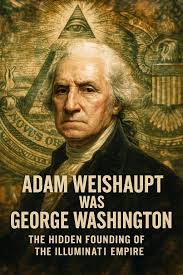
Part 3: The Modern Myth How Pop Culture Created Today’s Illuminati The Turning Point: 1975 Everything changed in 1975 with the publication of The Illuminatus! Trilogy by Robert Shea and Robert Anton Wilson . These three novels, written “somewhat tongue-in-cheek,” blended every conspiracy theory the authors could find into a sprawling, chaotic narrative . In the books, Weishaupt doesn’t die in Germany but emigrates to America, assumes the name George Washington, and establishes the United States as an Illuminati front. The novels are actually libertarian satires, but many readers missed the joke . After Illuminatus!, the Illuminati started “popping up literally everywhere” from Umberto Eco’s Foucault’s Pendulum to the movie Lara Croft: Tomb Raider, plus “countless comics, role-playing games, and miscellaneous pieces of fiction” . Dan Brown and the 21st-Century Revival In 2000, Dan Brown published Angels & Demons, introducing millions of readers to a version of the Illuminati as a powerful secret society bent on destroying the Vatican. Brown claimed on his website that “Secret societies like the Illuminati go to enormous lengths to remain covert” and that “separating Illuminati fact from fiction can be difficult” . Brown’s claims have been thoroughly debunked by historians. As Introvigne notes, “Actually, Dan Brown seems to take the continuing existence of Illuminati even more seriously than his character Robert Langdon” . But the damage was done. A new generation became convinced that the Illuminati was real and powerful. The Internet Era: From Fringe to Mainstream The internet proved to be the perfect ecosystem for Illuminati theories. As Stéphane François, a historian of conspiracy theories, explains, ideas that were once “confidential” found a global, unfiltered audience online . YouTube documentaries, Reddit threads, and TikTok videos allow “clues” to be compiled and shared instantly. Today, the modern Illuminati legend portrays the group as: A global elite controlling governments, media, and money A shadow force that decides wars, elections, and celebrities’ careers A secret society working toward a “New World Order” A cabal of billionaires, politicians, and pop stars An organization using symbols like the all-seeing eye and pyramid to mark their influence This picture is “dramatic, cinematic and honestly tailor-made for the internet” . But “there’s no evidence that such an organisation exists or that the historical Illuminati survived beyond the 18th century” .
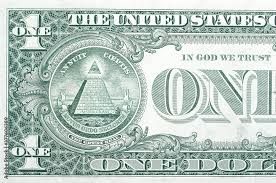
Part 4: The Evidence What We Actually Know What Is Factually True Let’s review what historians have confirmed about the Illuminati: Fact Source The Bavarian Illuminati existed from 1776-1787 It was founded by Adam Weishaupt, a university professor Its stated goals were promoting Enlightenment ideals Members included Goethe and possibly Mozart The order was suppressed by Bavarian authorities It had no significant connection to the French Revolution There is no evidence it survived past 1790 What Is Definitely Myth Conversely, these popular beliefs have no factual basis: Myth Reality The Illuminati controls world governments No evidence exists for any such organization Celebrities “sell their souls” to join Artistic choices, not secret rituals The all-seeing eye on the dollar bill is an Illuminati symbol It’s a Christian symbol of Divine Providence added in 1792 by a non-Mason The Illuminati orchestrates wars and economic crises Historical events have complex causes, not single hidden manipulators You can “join” the Illuminati online These are scams preying on conspiracy believers The Great Seal Debunking One of the most persistent myths involves the reverse of the Great Seal of the United States, featured on the one-dollar bill. Conspiracy theorists claim the pyramid and all-seeing eye prove Illuminati control of America. The historical reality is far less exciting: The pyramid design was derived from Pyramidographia, a 1646 book by John Greaves based on his trip to Egypt The eye was introduced by Congress Secretary Charles Thomson in 1792 as a Christian “Eye of Providence” representing God’s watchfulness over the new nation Thomson was not a Freemason The symbol appears in countless Christian churches predating any Masonic or Illuminati use The Illuminati never used this symbol As Introvigne concludes, “No, no matter how many books and movies claim it. The pyramid and eye symbol is never found among the Illuminati” .
art 5: Why We Believe The Psychology of Conspiracy The Comfort of a Blueprint The persistence of Illuminati beliefs tells us less about secret societies and more about human psychology. In a complex, chaotic world, the idea of a hidden but perfect order a single group controlling everything is profoundly comforting .”When something huge happens economic crashes, sudden political changes, a celebrity’s rise to fame it’s easier to think: ‘Someone planned this.’ It’s comforting in a strange way. Instead of randomness, we imagine a mastermind” . Pattern Recognition (Apophenia) Humans are wired to find patterns a survival trait that helped our ancestors detect predators. This tendency, called apophenia, leads us to see meaningful connections in random data . A triangle here, a hand gesture there, and suddenly a music video becomes “proof” of conspiracy . The Thrill of Secret Knowledge Believing in the Illuminati provides a sense of “insider knowledge” that sets you apart from the “sheeple.” Decoding symbols becomes an engaging game that makes the world feel more ordered and controllable . Historical Precedent America has weathered conspiracy theories before. From the Salem witch trials to fears of the Illuminati, from the Red Scare to the John Birch Society to QAnon, “conspiracy theories have served as dark counterprogramming to the American story taught in history books” . Historian Jonathan Den Hartog offers hope: “This gives me some hope, to know that we’ve had problems and we weathered them. There is an American capacity to take a breath, to try harder on our civic life and to rebuild trust” . Conclusion: Separating Fact from Fiction Are the Illuminati real? The answer depends on what you mean by “Illuminati.” If you’re asking about the historical Bavarian Illuminati founded in 1776 by Adam Weishaupt yes, absolutely. It was real, it had members, it had rituals, and it discussed changing society through Enlightenment principles. But it was dissolved in the 1780s and never recovered. If you’re asking about the modern legend a shadowy cabal of billionaires, politicians, and celebrities secretly controlling world events from behind the scenes no, there is zero credible evidence that such an organization exists.The Illuminati has become what scholar Massimo Introvigne calls a “mythical genealogy” a story that tells us more about our fears and desires than about any actual secret society . It’s a “metaphor for the fear that powerful people make decisions behind closed doors” . Real power does exist in the hands of governments, corporations, and wealthy individuals. But that’s not the Illuminati “that’s geopolitics, economics and human ambition” . The fascination stays because mystery sells. As the nine-year-old girl wisely noted, a conspiracy theory is “like a story or theory about something which is not true” . The Illuminati legend is exactly that a compelling story that has captured humanity’s imagination for over two centuries. But a story is all it ever was. Frequently Asked Questions Q: Did the Illuminati really exist? A: Yes, the Bavarian Illuminati existed from 1776 to approximately 1787. It was founded by Adam Weishaupt and promoted Enlightenment ideals . Q: Does the Illuminati still exist today? A: There is no credible evidence that the original Illuminati survived past 1790 or that any modern organization is a direct continuation . Q: Was Mozart in the Illuminati? A: There is strong circumstantial evidence but no definitive proof that Mozart was a member. Goethe definitely was . Q: Is the all-seeing eye on the dollar bill an Illuminati symbol? A: No. It’s a Christian “Eye of Providence” added in 1792 by a non-Mason. The Illuminati never used this symbol . Q: Why do people believe in the Illuminati conspiracy? A: Psychological factors include the need for control, pattern recognition, distrust of authority, and the appeal of having “secret knowledge” . Q: Are celebrities really in the Illuminati? A: No. Symbols in music videos are artistic choices or marketing strategies, not evidence of secret society membership . Q: What happened to Adam Weishaupt? A: He fled Bavaria after the order was suppressed and lived peacefully in exile until his death in 1830 . Q: Is there a connection between the Illuminati and Nazis? A: Some conspiracy theories merged Illuminati myths with antisemitic tropes, influencing Nazi ideology, but this was based on fiction, not fact .