
Introduction: An Icon Enveloped in Mystery
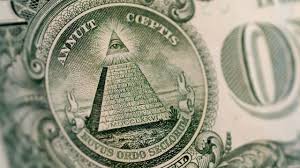
Upon examining the reverse side of a U.S. one-dollar bill, one encounters an unfinished pyramid beneath the vigilant gaze of a detached capstone. This emblem transcends its connection to ancient Egypt, emerging as a contemporary representation of mystery, authority, and clandestine influence the quintessential symbol of the Illuminati. Over the centuries, the pyramid has transformed from an architectural wonder into a formidable ideological instrument. This article meticulously traces its evolution, delving into its historical origins, its embrace by secret societies, its surge in popular culture, and the reasons behind its enduring fascination and unease in the modern psyche. We will construct our understanding from solid historical foundations before ascending to the speculative heights of conspiracy.
Part 1: The Foundation – Historical and Architectural Origins
Long before it became synonymous with shadowy power, the pyramid stood as a remarkable achievement in public engineering and spiritual belief.
Engineering Marvels of Antiquity: The Great Pyramids of Giza, erected circa 2580–2560 BCE, were not the products of enslaved labor but rather the result of skilled artisans who constructed monumental tombs for pharaohs. Their precise alignment with celestial bodies and impressive scale comprising approximately 2.3 million blocks reflects a society’s collective ambition and advanced knowledge of mathematics and astronomy. This original purpose, serving as a conduit to the divine and a testament to a ruler’s legacy, sows the seeds of its later symbolic significance: aspiration, permanence, and a hierarchical worldview with a singular, divine authority at its pinnacle.
Geometric and Philosophical Ideals: Ancient philosophers like Plato regarded geometric forms as perfect manifestations of divine concepts. The pyramid’s stable, upward-pointing structure symbolized the element of fire, aspiration, and the journey from the tangible to the enlightened. This philosophical perspective provided an ideal framework for subsequent esoteric groups seeking symbols of enlightenment and elevated knowledge.
Part 2: The Structure Adopted – Secret Societies and Esoteric Interpretations
The pyramid’s transition from public monument to secret symbol coincided with the rise of Western esotericism.
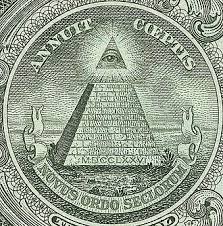
The “All-Seeing Eye” and the Great Seal: The symbol’s most notable official incorporation is found on the Great Seal of the United States, designed in 1782. The Eye of Providence perched atop the unfinished pyramid was intended to symbolize divine oversight of the fledgling nation’s unfinished endeavors. Advocated by figures such as Charles Thomson and William Barton, its inclusion was not the result of a secretive cabal. However, the fusion of Egyptian iconography with Masonic elements (the Eye being a recognized Masonic symbol) crafted an ideal backdrop for subsequent conspiracy theories.
A Blueprint for Control: In conspiracy narratives, the pyramid is reimagined as a literal hierarchy of power. The broad, uninformed masses constitute the base, with layers of government, media, and financial institutions above, all orchestrated by an unseen elite at the apex: the Illuminati. This structure embodies a central tenet of conspiracy belief: that global events are not random but meticulously orchestrated by a privileged few. The “unfinished” nature of the pyramid symbolizes the ongoing quest for total dominance.
Part 3: The Cultural Apex – “The Pyramid” in Modern Conspiracism and Pop Culture
In the 20th and 21st centuries, the pyramid symbol transcended esoteric circles to permeate global popular culture, propelled by literature, music, and the internet.
From Niche to Mainstream: Robert Anton Wilson and Robert Shea’s satirical work, *The Illuminatus! Trilogy* (1975), played a crucial role in embedding the pyramid and the Illuminati into countercultural mythology. This narrative was further amplified by nonfiction explorations, such as *The Eye of Providence* by David Ovason, which speculated on Masonic influences in Washington, D.C. The symbol evolved into shorthand for opaque, globalized power in an increasingly complex world.
The Pop Culture Prophecy: Prominent artists in hip-hop and pop, from Jay-Z to Madonna, have incorporated pyramid and Illuminati imagery into their music videos and branding. Conspiracy theorists interpret this as overt signaling or confessions by celebrities under control. A more nuanced analysis reveals artists utilizing powerful, provocative iconography to embody personas of ultimate success, secret knowledge, or rebellion against perceived systemic oppression. The symbol is versatile, representing either the oppressive system or the individual who has deciphered its mysteries.
Part 4: The Inverted Pyramid – Critiques, Psychology, and Legacy
To comprehensively grasp the symbol’s influence, it is essential to invert it and scrutinize the foundational beliefs it signifies.
Deconstructing the Myth: Historians consistently highlight the absence of evidence linking the Bavarian Illuminati (founded in 1776 and disbanded by 1785) to a sweeping global conspiracy. The group’s genuine objectives revolved around secular enlightenment and resistance to religious dominance in public life, rather than aspirations for world control. The adoption of similar symbols (pyramids, eyes) by various groups from Freemasons to Christian iconography reflects a shared cultural heritage rather than evidence of a singular guiding force.
The Psychological Architecture: The pyramid conspiracy theory fulfills profound psychological needs. It simplifies complex global events into an easily digestible narrative of intentionality. It provides a sense of agency, transforming feelings of helplessness into a clear, albeit malevolent, adversary. Furthermore, it offers a sense of special knowledge, positioning believers as part of an enlightened minority capable of perceiving the “truth” obscured in plain sight, much like the symbol on the dollar bill.

Conclusion: The Unfinished Symbol in an Age of Uncertainty
Ultimately, the pyramid of the Illuminati serves as a mirror reflecting the anxieties of societies that fear it, rather than revealing any hidden order. It functions as a projective symbol, a geometric canvas onto which we project our deepest concerns about power, control, and knowledge in an opaque world. From its origins as a tomb aspiring toward the heavens to its contemporary role as a meme symbolizing everything from banking conglomerates to celebrity cults, “the pyramid” endures due to its remarkable adaptability.