The Illuminati Unveiling the World’s Most Enduring Secret Society Conspiracy
The Illuminati: Unmasking the World’s Most Enduring Secret Society Conspiracy
Introduction: The Shadow in the Spotlight
The word Illuminatistands alone as one of the most powerful and evocative terms in modern culture. It conjures an immediate, vivid tapestry of symbols a piercing all-seeing eye atop a stone pyramid, covert hand signs flashed by celebrities, and whispers of a New World Order orchestrated from shadowy boardrooms. More than just a conspiracy theory, the idea of the Illuminati has become a foundational modern myth, a story we tell to explain the complexities of power, fame, and global events. But where does the fact end and the fiction begin? This definitive guide separates the historical truth of the Bavarian Illuminati from the sprawling, complex legend it inspired. We will decode the symbols, investigate the claims against the music industry and Hollywood, and answer the burning question on everyone’s mind: Are the Illuminati real? Prepare to journey from the lecture halls of 18th-century Bavaria to the glittering red carpets of today, unraveling the truth behind the world’s most infamous secret society.
Chapter 1 The Historical Genesis – What Was the Real Illuminati?
To dismantle the modern myth, we must first understand the historical seed from which it grew. Contrary to popular belief, the Illuminati was not an ancient cabal. Its story begins firmly in the Age of Enlightenment, on May 1, 1776, in Ingolstadt, Bavaria.Founder and Philosophy: The order was founded by Adam Weishaupt, a professor of canon law. Frustrated by the pervasive influence of the Catholic Church and conservative monarchy over public life and education, Weishaupt sought to create a secret society that would promote rationalism, secularism, and intellectual freedom. His original name for the group, the “Order of Perfectibilists,” hints at its goal: the perfection of human character and society through reason and philanthropy.Structure and Secrecy: Modeled in part on the Freemasons, the Illuminati was organized as a hierarchy with layered secrecy. Members progressed through ascending grades Novice, Minerval, Illuminated Minerval, and finally, the Priesthood each level revealing more of the order’s true aims. They used classical pseudonyms (Weishaupt was “Spartacus”), complex rituals, and internal espionage to ensure loyalty. Their goal was not global domination in a militaristic sense, but the infiltration of institutionsgovernment posts, educational systems to gradually steer society toward Enlightenment ideals from within.Suppression and Dissolution: The order’s rapid growth attracted suspicion. In 1784, Karl Theodor, the Duke of Bavaria, issued an edict banning all secret societies not authorized by the state. The following year, in a series of raids, authorities seized incriminating documents that outlined the group’s subversive goals and internal workings. These papers were published, scandalizing the public and leading to the complete dissolution of the Illuminati by 1787. Its members were exiled or disbanded. Historically, the order was active for just over a decade.This is the crucial, often overlooked fact: The original Bavarian Illuminati was a short-lived, failed experiment in social engineering. It did not survive the 18th century. The leap from this historical footnote to the planet-controlling behemoth of modern legend is the work of two centuries of fear, fiction, and cultural reinterpretation.
Chapter 2 The Birth of a Legend – From History to Conspiracy Theory
How did a defunct German intellectual club transform into the alleged puppet master of world affairs? The metamorphosis began almost immediately after its suppression.The 19th Century Reactionary Fear-Mongering: In the wake of the French Revolution (1789-1799), conservative European writers, most notably the Scottish physicist John Robison and French Jesuit Augustin Barruel, drew a direct line between the fallen Illuminati and the revolutionary terror. In their works, Proofs of a Conspiracy (1797) and Memoirs Illustrating the History of Jacobinism (1797-98), they argued that the Illuminati had not been destroyed but had simply gone deeper underground, masterminding the revolution to destroy Christianity and monarchy. This narrative of a hidden, world-spanning revolutionary network provided a simple, frightening explanation for a complex, chaotic historical event, cementing the Illuminati as a potent symbol of subversion.The American Frontier and Anti-Masonry This European fear crossed the Atlantic. In the United States during the 1820s and 1830s, a populist Anti-Masonic movement arose, suspicious of secret societies’ influence. Preachers and pamphleteers conflated the Freemasons with the Illuminati, weaving them into a grand anti-American, anti-Christian plot. Sermons warned that these groups were infiltrating the young republic. This period firmly planted the idea of the Illuminati as an anti-American force within the nation’s political discourse.The 20th Century Mainstream Adoption: The conspiracy lay dormant for decades before resurfacing with new vigor. The 1960s and 70s, with their political assassinations, the Vietnam War, and social upheaval, created a perfect climate for distrust. The Illuminati conspiracy theory was revitalized and popularized by books like Robert Shea and Robert Anton Wilson’s satirical The Illuminatus! Trilogy (1975), which, though fiction, introduced countless readers to the lore. This was followed by more “serious” works like The Holy Blood and the Holy Grail and later, The Da Vinci Code, which traded on similar themes of ancient secrets and hidden hierarchies. The theory was now a flexible framework, ready to absorb any new global anxiety.
Chapter 3 Decoding the Symbols – The Visual Language of Secrecy
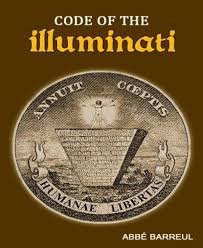
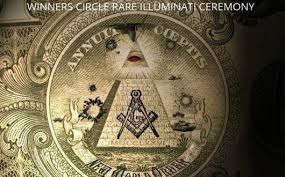
The modern Illuminati myth is sustained not by documents, but by symbols. Believers engage in a form of modern iconography, interpreting recurring images as proof of the cabal’s influence. Let’s decode the most prominent Illuminati symbols.1. The All-Seeing Eye and the Pyramid (The “Illuminati Triangle”) This is the master symbol. The all-seeing eye (often called the “Eye of Providence”) within a triangle, hovering over an unfinished pyramid, is famously on the reverse of the Great Seal of the United States, printed on the one-dollar bill since 1935.Conspiracy Interpretation: The pyramid represents the hierarchical structure of society the masses at the bottom, the secretive elite (the Illuminati) at the missing capstone. The all-seeing eye symbolizes their constant surveillance and god-like control. Its placement on U.S. currency is touted as the ultimate “hidden in plain sight” proof of their control over the American and global financial system. Historical Context The symbol’s actual origins are far more mundane. The eye in a triangle was a common Christian symbol in Renaissance and Baroque art, representing God’s benevolent oversight. The unfinished pyramid, proposed by the design committee for the Great Seal, signified the young nation’s strength and future growth. The Latin mottoes, Annuit Coeptis (“He [God] has favored our undertakings”) and Novus Ordo Seclorum (“A new order of the ages”), refer to the founding of America, not a sinister New World Order.2. The Number 666 Known as the “Number of the Beast” from the Book of Revelation, 666 is a cornerstone of apocalyptic conspiracy thought.Conspiracy Interpretation It is seen as a numeric signature or code used by the Illuminati and its alleged frontmen. Believers find it embedded in barcodes, business logos, and event dates, interpreting it as a mocking, Satanic trademark.Historical Context: Most biblical scholars agree the number was a cryptic reference to a contemporary persecutor of early Christians, likely the Roman Emperor Nero, using a Hebrew numerology system called gematria. Its application as a universal evil code is a modern interpretive leap.3. Illuminati Hand Signs This is perhaps the most visible “evidence” in the age of social media. Gestures like covering one eye (the “one-eye sign”), forming a triangle with the hands, or the “rock on” horned gesture are labeled as Illuminati hand signs.Conspiracy Interpretation: These are seen as silent, public acknowledgments of membership or allegiance, flashed by celebrities and politicians to signal their loyalty to the secret society.Cultural Context: In reality, these gestures have myriad innocent meanings. Covering one eye can be a playful pose, a reference to “seeing the truth,” or an artistic aesthetic. The horned sign is a universal symbol in rock and metal music. The human tendency to find patterns (apophenia) leads to interpreting random gestures as part of a coordinated signal.
Chapter 4 The Pop Culture Stage – Illuminati in Hollywood and the Music Industry
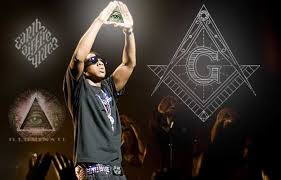
If the Illuminati controls the narrative, its most powerful megaphone is pop culture. The theories surrounding the Illuminati in Hollywood and themusic industry Illuminatiare where the ancient myth fully modernizes.The “Celebrity Illuminati” Archetype: The core belief is that fame and success at the highest level are not products of mere talent or luck, but require a Faustian bargain. Aspiring stars allegedly “sell their soul” or pledge allegiance to the secret society in exchange for meteoric fame, wealth, and influence. In return, they act as propagandists, normalizing the cabal’s symbols and ideologies through their art.Case Study 1 Beyoncé and Jay-Z – The Royal Couple of Conspiracy No figures are more central to the celebrity Illuminati narrative than Beyoncé Knowles-Carter and Shawn “Jay-Z” Carter. They are the king and queen of the theory.Symbolic Imagery Beyoncé’s artistry is intensely scrutinized. Her use of all-seeing eye motifs, pyramid stages, Egyptian goddess imagery, and the color gold in albums like Lemonade and performances like the 2017 Grammys is parsed as ritualistic. The very name of their joint tour, “On the Run,” is interpreted as a confession.Jay-Z’s “Occult” Branding: Jay-Z’s Roc-A-Fella records used a pyramid logo. His famous “Roc” hand sign (a diamond shape) is called an Illuminati triangle. His lyric “I’m like the Illuminati / All this money, how can I be Satan?” from the song “Heaven” is taken as a literal confession rather than artistic bravado.The “Twins” Narrative: The birth of their twins, Sir and Rumi, was engulfed in theory, with the names and birth dates analyzed for occult numerology, seen as a high-level ritual within the society.Case Study 2 The Broader Music Industry Illuminati The theory extends far beyond one power couple. It posits the entire industry as a front.Award Show Rituals The Grammys, VMAs, and Super Bowl Halftime shows are framed as modern-day occult rituals broadcast to the world. Performers’ costumes, choreography, and stage design are dissected for hidden symbolism.The “One-Eye” Trend: A simple scroll through celebrity Instagram photos reveals countless artists Rihanna, Katy Perry, Kanye West posing with one eye covered. To believers, this is a coordinated signal. To critics, it’s a viral pose trend, often used to convey an air of mystery or aesthetic coolness.Why This Narrative Resonates:Explaining Extraordinary Success It simplifies the chaotic, unfair nature of fame. The idea that Beyoncé is a generational talent who works relentlessly is complex. The idea that she’s a pawn in a secret society is a simple, dramatic story.Moral Judgment. It often carries a subtle (or overt) moral critique of mainstream culture, framing popular music as literally demonic or spiritually corrupting.Interactive “Detection”. It turns media consumption into an interactive game. Fans and skeptics alike become detectives, hunting for clues, which creates deep engagement and community around the content.
Chapter 5. The Global Web – Freemasons, New World Order, and Beyond
The Illuminati is never alone in conspiracy lore. It is the presumed central node in a vast, interconnected web of alleged secret power structures.The Freemasons Illuminati Connection. This is the oldest and most persistent link. The Freemasons, a real fraternal organization with centuries of history, are often portrayed as the recruiting ground, public face, or subordinate branch of the Illuminati.Why the Confusion?. The historical Bavarian Illuminati did recruit from Masonic lodges and adopted similar structures of secrecy and ritual. Furthermore, Masonic iconography shares symbols like the all-seeing eye, the compass and square, and the pyramid. This historical overlap and symbolic borrowing fuel the theory that Freemasonry is a vehicle for Illuminati goals.The Reality. Freemasonry is a decentralized social and charitable organization with millions of members worldwide. While historically influential, its stated principles are brotherly love, relief, and truth. There is no evidence of a unified Masonic plot for global domination, let alone one directed by a defunct 18th-century group.The Ultimate Goal. The New World Order (NWO): This is the endgame. The New World Order is the conspiracy theorist’s term for the alleged plan to establish a totalitarian one-world government. In this narrative, the Illuminati (and its subsidiary groups like the Bilderberg Group, the Council on Foreign Relations, and the Trilateral Commission) uses its control over finance, media, and politics to manufacture crises wars, economic collapses, pandemics to frighten the global population into willingly surrendering national sovereignty and personal freedoms in exchange for security.Geographic Adaptations. As we’ve explored in snippets like Illuminati in the United States orIlluminati in the Netherlands, the theory localizes. In the U.S., it focuses on the Federal Reserve and Washington D.C. In the U.K., it might center on the City of London and royal bloodlines. In the Netherlands, Amsterdam’s history as a center of finance and liberal politics makes it a ripe setting for the lore. The phrase Join Illuminati worldwide speaks to the myth’s promise of forbidden, global power, a digital-age fable spread in online forums and shady YouTube videos.
Chapter 6. The Psychology of Belief – Why the Illuminati Myth Endures
The persistence of the Illuminati conspiracy for over 200 years, adapting to every new medium from pamphlets to TikTok, points to a deep psychological appeal. It’s not a intellectual failure, but a narrative one that fulfills specific human needs.1. Pattern Recognition (Apophenia): Humans are hardwired to find patterns, a survival trait that helps us predict danger. Conspiracy theories like the Illuminati exploit this by connecting random, unrelated events a celebrity’s hand gesture, a symbol on currency, a tragic news event into a satisfying, coherent story. The mind prefers a frightening pattern to chaotic randomness.2. Agency and Explanation The world is terrifyingly complex. Economic downturns, pandemics, and social change are multidirectional phenomena with countless causes. The Illuminati theory provides a singular, personalized explanation: a secret group of evil people did this. This replaces anxiety-inducing complexity with a clear (if frightening) narrative. It also provides a sense of agency if the problem is a group of people, then theoretically, they can be exposed and defeated.3. Epistemic Satisfaction Believers often feel they possess “secret knowledge“ denied to the “sheeple.” This creates a powerful in-group/out-group dynamic. Decoding symbols or “connecting the dots” provides a sense of intellectual superiority and purpose. The feeling that you alone can see the truth is profoundly compelling.4. Moral Clarity and Coping Mechanism. These narratives often frame events in a stark battle between absolute good and absolute evil. This provides clear moral lines in a morally ambiguous world. For some, it can also be a coping mechanism for personal failure or societal disadvantage; if the system is rigged by a secret cabal, then one’s own lack of success is not a personal failing, but the result of a rigged game.
Chapter 7. Are the Illuminati Real? The Final Verdict
We have traversed history, decoded symbols, and dissected psychology. We arrive at the fundamental question: Are the Illuminati real?The Historical Answer is Yes and No.YES, the Bavarian Illuminati was real. It was founded on May 1, 1776, by Adam Weishaupt. It had specific Enlightenment-era goals, a membership of intellectuals, and was disbanded by authorities in the late 1780s. It is a documented historical subject.NO, the modern global-controlling Illuminati is not real. There is zero credible, verifiable evidence that the Bavarian order survived, transformed, and now commands the world’s governments, banks, and entertainment industries. The entire edifice is built on circumstantial symbolism, historical conflation, and psychological pattern-seeking.The “Illuminati” That Is Real What the conspiracy theory accurately identifies, but mislabels, is the existence of structural power and influence. Wealthy individuals, corporations, lobbying groups, and political factions do exert tremendous, often opaque, influence on world events. Economic inequality, media consolidation, and political corruption are real and serious issues. The “Illuminati” myth, however, personalizes and mystifies these impersonal structures. It replaces the diffuse, boring, and complex problem of systemic influence with a thrilling story about a secret club with evil rituals.Conclusion: The Power of a Story The true power of the Illuminati lies not in boardrooms, but in the human mind. It is the ultimate modern folklore a adaptable story that gives shape to our fears about power, explains our inequalities, and turns the chaotic stream of news and celebrity culture into a detective novel we can all play. The all-seeing eye we are most captivated by is not on the dollar bill, but the one we use to look for meaning in the shadows. The search for the Illuminati ultimately reveals less about a hidden world and more about our enduring need for narrative, agency, and understanding in an overwhelmingly complex age.So, the next time you see a pyramid in a logo or a celebrity covering one eye, you’ll understand the centuries-long journey that simple image has taken. You are witnessing not a secret signal, but the living, breathing power of one of history’s most resilient and captivating stories.